A transformative framework: The Transport Accident Commission Protocols 20 years on
An interview with Geraldine Collins, Principal Lawyer, Maurice Blackburn
They have been a framework for transforming an adversarial space into one grounded in trust, fairness and predictability. The TAC Protocols bring two worlds together – public administration and advocacy – around a single purpose: fair, timely outcomes for injured Victorians through a sustainable process.
The Protocols were established in 2005 by agreement between the Transport Accident Commission (TAC), Law Institute of Victoria (LIV) and Australian Lawyers Alliance (ALA) to provide an efficient and transparent process to deliver compensation to people injured in a transport accident.
In November 2025, we celebrated 20 years of the Protocols, and this year enhanced, updated Protocols will be introduced.
Long term ALA member and past State and National president Geraldine Collins has been a part of the negotiations for almost the entire 20 years. We had a conversation with Geraldine to find out more.
ALA: Can you explain what the Protocols are and how they are used?
Geraldine: The Protocols are an alternative dispute resolution process (ADR). It's a non-legislative ADR process. It's effectively a voluntary process, but the vast majority of Victorian practitioners use the Protocols.
The system in Victoria has a mixture of no-fault benefits and common law. No-fault benefits are available for anybody injured in a transport accident. These are hospital, medical and similar expenses, wages for up to three years and a small impairment benefit lump sum that is paid if you've got an AMA impairment of greater than 10%.
Then the common law entitlement is there if you satisfy a statutory threshold level of injury.
An injured person has their entitlements assessed and settled through the use of the Protocols.
ALA: I understand the Protocols cover three different areas. Can you explain these?
Geraldine: The original 2005 Protocols covered the three practical areas within the jurisdiction.
The first Protocol covers no-fault disputes. The TAC makes a decision regarding the persons "no fault" benefit/s and the person seeks to dispute or challenge the decision. It covers anything within the no-fault regime. So, it could be denial of a claim, denial of a medical expense, termination of medical expenses, denial of liability for an injury, a dispute about the quantum of somebody's wages, or the period of time for which they're entitled to receive loss of earnings.
The second Protocol manages the impairment process. It establishes the pathway for an impairment claim to be lodged and determined.
The third Protocol covers the "serious injury" application and common law resolution.
In practice, a practitioner follows the steps that are outlined within the relevant Protocol. Effectively it is a method by which you agitate the case without litigation. It involves full and frank disclosure, all cards on the table, face up. We give TAC everything, they give us everything and it is a negotiation process to see if the matter can be resolved without going into litigation.
Since the original Protocols we have expanded the Protocols into other areas within the jurisdiction to include fast track and proactive common law, accidents in the course of employment, limitations of actions, common law actions for injuries arising from the "use of" a vehicle and Wrongs Act common law claims.
ALA: So why were the Protocols originally developed?
Geraldine: They were developed in late 2004, early 2005, and they came about because at that time, in this jurisdiction, everything was litigated. It was cost ineffective, and it was very unsatisfactory for the injured person because they had to wait extended periods of time and go through litigation for absolutely everything. For example, if you had your physiotherapy treatment terminated, you'd issue proceedings, and you would spend 18 months litigating it, which is not useful when somebody needs the physio now. If liability for surgery was denied, you'd spend 18 months litigating it. Again, if you need the surgery, you need it now, you don't need it in two years' time.
Often it would not be cost-effective to lodge a dispute. It was a disincentive for people to challenge decisions that were not of great monetary value but could be of significant personal importance to them.
In the common law field, every application for the granting of a serious injury certificate was litigated. Once the certificate was obtained, every common law case was litigated. The injured person faced two seperate court proceedings to resolve their common law claim.
So, somebody would have their accident, and generally the timelines for them to resolve their common law claim would be six, seven, eight, nine or ten years down the track.
It was also nasty litigation – it was boxing gloves with no rules. People were cross-examined about all sorts of very personal things, and it meant that everything was slow. The court systems were being choked up with these disputes.
Legal costs were rising at an unsustainable level.
The Protocols were originally developed to address these issues but they were also developed in an environment where we'd had workers' common law rights abolished by the government in the early 90s. They were reinstated with change of government towards the end of the 90s, but they were restricted.
We'd had the "insurance crisis" of the early 2000s, which led, in Victoria, to reforms to the Wrongs Act which restricted common law rights.
We had a jurisdiction where legal costs were spiralling out of control – and if costs are out of control, you either control the costs, or you control the expenses within the system, which seems to inevitably lead to the restriction or abolition of people's rights and entitlements.
This was coupled with a less than adequate process for people to have their entitlements dealt with.
In this environment, a new CEO came into TAC. He came in with fresh eyes and said "what an earth is going on with this system?" He worked with the plaintiff lawyer representatives to negotiate the whole process. He recognised that plaintiff lawyers play an important role, so that was a fundamental shift in mindset.
He started turning the boat around. He acknowledged that the insurer doesn't always get it right. So, it was this environment that led to the process whereby the Protocols were negotiated. It made it far easier for TAC in terms of future financial planning, in that they knew roughly what their legal liabilities would be, so it was a means of controlling legal costs but then there were benefits to the plaintiff lawyers too.
First, you're not in litigation. Secondly, your client is not facing the risk of an adverse costs order. Thirdly, there is full disclosure of documents which you would not otherwise be entitled to receive.
There were swings and roundabouts but the process established a controlled method by which disputes and people's entitlements could be obtained faster than they would be in a litigation scenario.
ALA: How have the Protocols changed the work for legal practitioners?
Geraldine: There is some disadvantage in that lawyers don't learn litigation skills. There will be some lawyers who work in this jurisdiction who have never litigated a matter. But you still have to hone your negotiation skills, you've still got to critically analyse a case and work out what evidence you need.
It is a far more cooperative working environment than we experienced before the Protocols – less antagonistic. It's just a nicer environment to work in, to be honest. I feel it's probably not as stressful. It's draining when you're at war with your opponent every single day on every single matter.
ALA: What's been the key to maintaining this relationship with TAC and having the Protocols work for 20 years now?
Geraldine: The majority of the success is based on learning to trust each other. The personal relationship is vital. I also feel that senior management at TAC and the plaintiff lawyers (generally) see the benefits of working cooperatively.
We went through a period in 2013 when there was legislative change done without consultation. Suddenly we had a Bill in Parliament that was amending the Transport Accident Act. Consequences of the amendments meant the Protocols couldn't work anymore. As an example, one of the amendments was the introduction of joint medical exams. TAC couldn't pay for a medicolegal exam unless it was a joint one. But the Protocols required the plaintiff lawyer to get the medicolegal reports and serve them in support of the person's impairment claim, dispute, or serious injury application. The Protocols were based upon the lawyer providing all the evidence to TAC at the time of lodging the Protocols application.
There were other amendments within the piece of legislation that were restrictive of rights as well, but the main issue was the joint medical exams, which meant that the Protocols would come to a halt.
That caused a huge issue and rift, and a loss of a great deal of faith on the plaintiff lawyer's behalf with TAC. It was repaired in the end but that required a great deal of work and a re-establishment of trust which resulted in us rewriting the Protocols in 2013–2014 which led us to the 2016 Protocols.
Since then, we have developed a legislative working group and now look at the legislation in consultation and see what things need to be changed.
We are never going to agree on everything, and there needs to be a level of tension between the parties within the system, but everybody recognises the fact that the Protocols are quite an amazing system and both sides recognise that there is a great deal of value in having them, so everyone works hard to make sure we don't jeopardise them.
ALA: Why have the Protocols been rewritten again now?
Geraldine: 2025 was the 20th anniversary and we thought it was an ideal opportunity to really look at them and see what we could do to make them work even better. We sought feedback from the plaintiff lawyers about what the pain points were. TAC obtained feedback from their operational staff regarding their main pain points and we've worked out what we can do to try and make that better.
It is an optimisation process and it has taken over 14 months of solid work to develop the new Protocols. We have addressed issues that could have become a problem. We are always mindful of the fact that if we don't do anything to proactively manage problems then something may be done for us.
ALA: Is there anything you think other states and territories could learn from the implementation of the Protocols in Australia?
Geraldine: I think the Protocols clearly show that collaboration, not conflict, serves our injured clients the best. It has taken an awful lot of work, an awful lot of goodwill and an awful lot of trust but we can see the benefits. I think they are one of the most successful examples of alignment in our legal system.
As an example, previously a TAC client would go to between six and seven medical exams per claim and now it's between two and three. So, that's a benefit to a client. Around 90% of all common law claims are resolved under the Protocols.
It means we have a system that is not intimidatory for the client. They're not having to go to court, they're not having to be cross-examined. It's faster and it's far more economically viable for the system, but also for the client.
It absolutely takes goodwill on both sides. If you didn't have the goodwill, it wouldn't work.
It is also non-legislative which has the benefit of being flexible. So, if something is not working, or there's something that we've missed, or there's an unintended consequence, then we can fix it quickly.
Recognising that each state has different systems, but the Protocols are an amazing process to use as ADR.
I think the success has been demonstrated over 20 years and the optimisation that is coming into effect now will make them work even better and faster.
We can tell clients that, within two years of their accident, they will have their common law claim wrapped up and they won't have to step into a courtroom, rather than "you are going to through hardcore, nasty litigation and in ten years' time you will get your money". It's a world of difference.
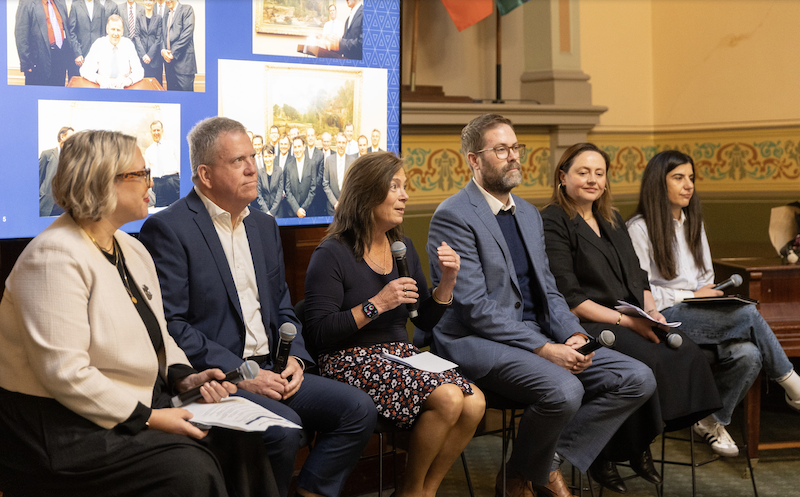
Geraldine Collins presenting at the 20-year TAC Protocols celebration, November 2025
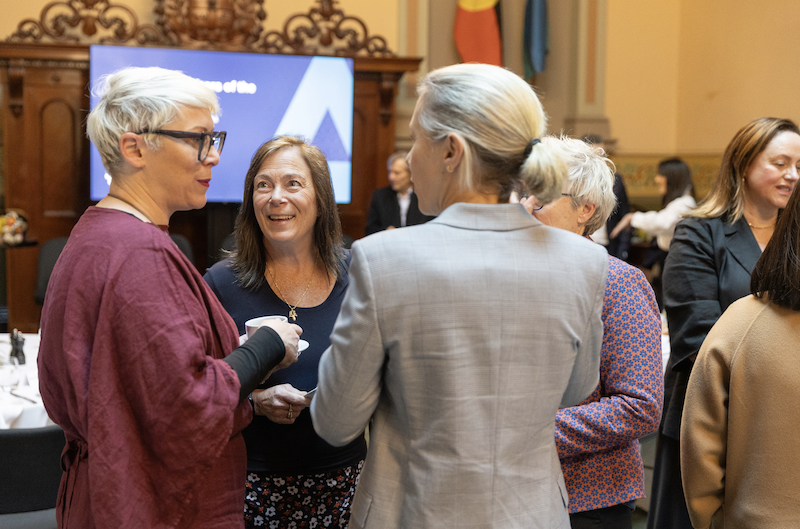
Geraldine Collins is a Principal Lawyer, In-House Counsel and Accredited Specialist in personal injury law and practises in road accident injuries in the Melbourne office of Maurice Blackburn. Geraldine has practised in personal injury law for over 30 years and is one of the leading practitioners in Victoria.